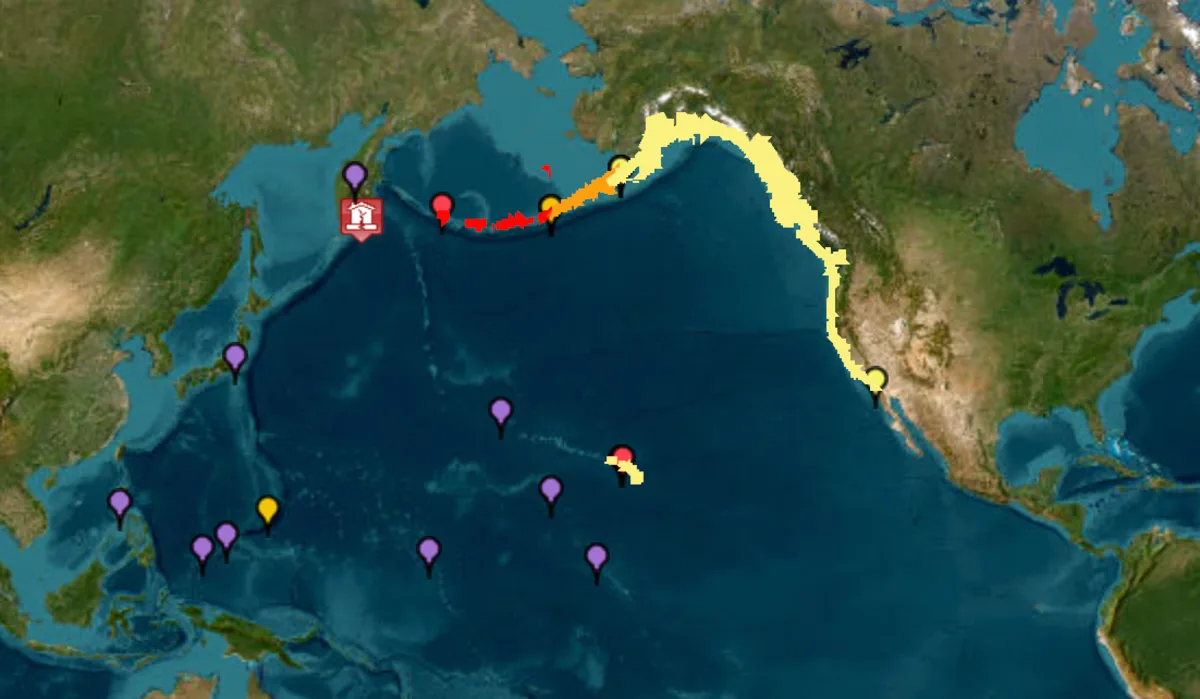
A powerful magnitude 7.9 earthquake struck deep beneath the Pacific Ocean floor approximately 180 kilometers off the northeastern coast of Japan on Saturday, triggering immediate tsunami warnings across six nations and prompting mass coastal evacuations in Japan, the Philippines, Taiwan, Papua New Guinea, and parts of the western United States.
The Japan Meteorological Agency issued its highest-level tsunami alert within minutes of the quake, warning residents of coastal prefectures to move immediately to high ground. Sirens rang across harbor towns in Iwate and Miyagi prefectures as memories of the 2011 disaster weighed heavily on residents who have spent years rebuilding. Bullet train services were suspended across northeastern Japan as a precautionary measure, and airports in the affected region temporarily halted operations.
Initial tsunami waves measuring between one and two meters were recorded at monitoring buoys east of Honshu Island roughly forty minutes after the seismic event. Scientists at the Pacific Tsunami Warning Center cautioned that wave heights could intensify closer to coastlines where seafloor topography tends to amplify energy. Officials urged residents not to return to shore until formal all-clear signals were issued.
International rescue coordination teams were placed on standby across the region. The U.S. Pacific Command activated its humanitarian assistance protocols as a precaution, pre-positioning ships and airlift assets in case infrastructure damage required external support.
By Saturday evening local time, authorities reported no confirmed fatalities linked directly to the tsunami waves, a fact credited to rapid warning systems and public preparedness drills conducted regularly across the region. Infrastructure assessments are ongoing, and aftershocks above magnitude 5.0 continued to rattle the area, keeping emergency services on high alert through the night.